
PCB DFM Checklist: 12 Checks Before You Send Gerber Files
Twelve practical checks that prevent fabrication queries, assembly problems and costly respins.
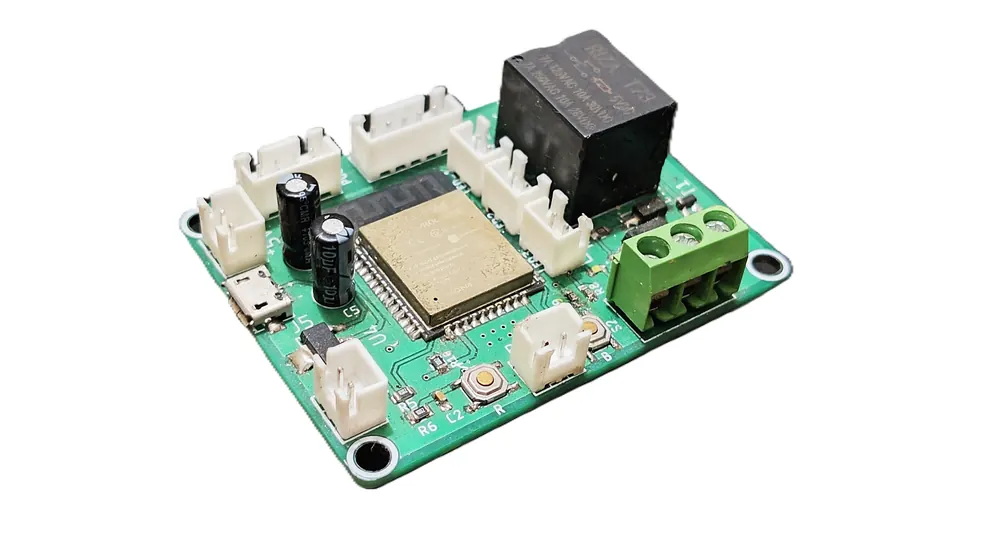
Every populated circuit board is built with one of two component mounting methods, or both. Choosing between surface-mount technology (SMT) and through-hole technology (THT) affects board size, strength, cost and how easily you can repair a prototype. This guide explains the difference in plain terms.
In SMT, components sit directly on copper pads on the surface of the board. Solder paste is printed onto the pads, components are placed on the paste, and the board passes through a reflow oven where the paste melts and forms the joints. Because parts have no long leads, they can be very small, such as 0402 and 0201 chip components, or have many connections in a small footprint, such as QFN and BGA packages.
In THT, component leads pass through drilled holes and are soldered on the opposite side, either by hand, by selective soldering or by wave soldering. The lead passing through the board gives a strong mechanical connection, which is why THT remains common for connectors, terminal blocks, transformers, large capacitors and relays.
| Factor | SMT | THT |
|---|---|---|
| Component size | Very small to medium | Medium to large |
| Board density | High, parts on both sides | Lower, holes use routing space |
| Mechanical strength | Good for light parts | Better for heavy or frequently stressed parts |
| Automation | Highly automated placement and reflow | More manual steps, unless wave or selective soldering is used |
| Hand rework | Needs skill and tools for fine-pitch parts | Easy to replace by hand |
| Typical parts | Resistors, capacitors, ICs, modules | Connectors, power parts, switches, relays |
Most real products use both. A typical board has SMT parts for the logic and power control, plus through-hole connectors and a terminal block at the edge. The assembly order matters: SMT parts are usually placed and reflowed first, then through-hole parts are soldered afterwards. Telling your assembler which parts you want through-hole, and checking that your design leaves enough clearance for soldering, avoids surprises.
Assembly cost depends on the number of unique parts, the number of placements, the package types (BGA and fine-pitch parts need more inspection) and how many through-hole joints must be made. Sending a clear BOM and pick-and-place file helps an assembler quote accurately. See which files you need for a PCB assembly quote, or explore our PCB assembly service.
Twelve practical checks that prevent fabrication queries, assembly problems and costly respins.
What to send for a fast, accurate PCBA quote and the mistakes that cause delays.
The steps from first idea to a tested prototype board, and where projects usually slip.
Tell us about your PCB, IoT or electronics project. Our engineering team will review your requirement and reply within 1 business day.